
04/02/2022
Sports marinas, due to the activities they develop, are spaces linked to sports activities and nautical tourism. In Spain there are 350 ports sports with capacity approximately for 132,000 berths. The 67% of these marinas are located on the Mediterranean coast. Y of the 350 marinas, 214 are located in theMediterranean coast. The remaining 138 are in different Spanish communities and provinces bathed by the Atlantic Ocean and the Cantabrian Sea.. The number of amarris has evolvedon the years of form significative. Pfor José Luis Almazán Palominoinvestor and manager of port assets "the demand for the moorings to hasn incrementaldo from exponentially around the 250% in recent years thirty years".
To the "Ports Deportivos" are known technicas well as the facilities and the berths located at the sheltered marine spaces or the spaces reclaimed from the sea. Y the "Marinas Deportivas". o simply "Marinas". are those that are located in spaces that were once dry land. That is, they are water spaces generated by excavations and dredging.
However, as a general rule, whether they are built on reclaimed land or not, they may be built on to the sea or excavated in the marinas are generally referred to as "Marinas" or "Marinas Deportivas".". A Marina is the space par excellence where sports infrastructures linked to nautical sports are set up. Also those related to the nautical tourism and to the activities of support to the coastal leisure.
The management of the marina como service
In general, marinas are located in spaces singular, that usually enjoy various attractions, as they are included and conform landscapes where people interact with nature. For this reason, manage adequadamente marinas are assumed, not only assume the provision of the various services required for the vessels, both sailing and motor, as well as to the crew members, to the visitors, the crews and workers both of the sea as of tierra. The responsibility of the Marina management team goes beyond the management of the fleet itself. Nor is it limited to processing the use of the facilities in transit or managing temporary visits.
Element dinamizador of the economy
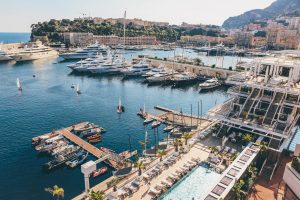
The Marina appears not only as a necessary space to meet the needs of vessels. It is also a dynamizing element of the economy of the area where it is located. A marina is an employment-generating center. It is a space for tourist attraction for the visitors, both arriving by sea in their boats como by land to enjoy the attractive spaces and the different activitiesthe development of the company's environment.
For the management of the marinas, the following must be integrated different types of measures in a plan both of character global like particular at the level of the operations, from coordination, of the management, from the financing and from the supervision. Moreover, it is necessary to guarantee not only the provision of services. It is necessary to take care of the conditions to facilitate leisure services, rest and enjoyment of these activities.
For José Luis Almazán Palomino "managing a marina properly means taking care of a the needs demanded by the users of these privileged spaces, both because of their nature generator of employment, activity and wealth, as well as for the activities that take place in them".
Aspects environmental
The proper management of marinas and marinas, includes many aspects. Among them are those related to respect for the environment. Both in the aquatic and terrestrial environment, it is necessary to take care of this point in environments of high ecological value. The environmental policy of Marina management must close the gap between the original landscape and the built one. And once the Marina starts operating, the landscape must be respected.
Among the elements that must be faced for make an adequate management of marinas, it is necessary to take into account a wide range of range from aspects. For a correcta management to be executed optimally the maintenance operations of the infrastructures bytuarias. This section includes those related to the jetties fixed and the floating, the springs, the dry docks, the surveillance facilities and of protection or the suministros.
In addition hng to act by working on all aspects ofs these areas without interfering in the users and visitors. Within this field, the following are contemplated actions with tratings of waste solids, the liquids gray water treatment and negrasthe oilseeds, those of coat, the anchoring elements. Without forgetting the facilities for electricity, water, fuel, supplies and naval effects.
The managementThe integration of the landscape
Pon the other hand, it is necessary to take into account y to highlight the most significant elements of the management of then de the Navy from el point of view of its integration into the environment landscape. To this end, it is necessary to identify those aspects that are more important from a public perspectiveaisajística for take into consideration the landscape, within the processes of the decision making.
Water quality requires special attention, in particular from the sheltered water of the docking basins and amarre. This is precisely because the sheltered conditions favor a lack of water renewal and a reduction in oxygenation. Acting in this way avoids the risks from algae blooms, as well as other types of algae. aspeeutrophication-generating cts.and unpleasant odors.
In ehis context José Luis Almazán Palomino, managing partner from Ocean Capital Partners, states that "by the OCP group existe a concern for environmental aspects in the port assets we develop, especially those related toThe company has a long history of dealing with marine pollution, the oxygenation and water quality".

The actions of OCP
Aware of the importance of the environment, the IOM has a strong environmental focus in every project developed. En all the projects linked to leisure from coastline and a sport boating, environmental considerationsis occupiesn a privileged position from the initial stages of the project and from construction.
An example of an outstanding environmental project is the marina under construction for mega yachts in Malaga. This marina has implemented a type of ecological caissons used in the construction of maritime civil works. The designed surfaces serve as a shelter for marine fauna. In addition, they collaborate in the processes of self-purification and oxygenation of the waters of the boat mooring docks.
The integrated policy plan
El level dthe market maritime port is very demanding and requires implement an overall integrated policy plan. The maritime market operates in a constantly changing environment with a specialized and technified technical competence. Consequently, it has to be served by companies with more specialized and competitive services.
The general plan integrates the aspects to be addressed. Special attention is paid to values associated with the quality of service provision and aspects related to the environment. Specific areas include the adequate consumption of energy and the use of clean energies. It is also necessary to measure the quality of air, water, particulate matter and greenhouse gas emissions. It is also necessary to achieve an optimal use of non-renewable resources and avoid contributing to global warming, among others. Meeting these needs requires dedicating part of the resources generated to research and technological development. This makes it possible to incorporate innovation in activities in the maritime port sector.
The regulations UNE and ISO
Within the integrated management systems, measurable parameters of quality and environmental aspects must be used. UNE and ISO standards must be respected, and the provision of services must be certified in accordance with these standards. This service provision must be carried out by qualified agencies to achieve the highest level of competitiveness and quality. This benefits users and society in general, so closely dependent on the maritime port area.
Meeting these needs requires dedicating part of the resources generated to research and technological development. This makes it possible to incorporate innovation into the various activities in the maritime port sector.
Para insuredThe effective implementation of this policy isolicy integrated quality and safety managementedio ambiente, José Luis Almazán Palomino suggests "establishesr a digital observatory of monitoring and annual compliance assessment that establish some goals verifyables through elements measurable and quantifiable for obtain an assessment and a tracking continued of the objectives initially established in the plan".
Integrated systems generate less waste and less consumption of non-renewable resources. Thus, they allow continuous improvement actions and adaptation to the changing circumstances of the environment.
