
14/01/2022
We have just started the new year and it is worth considering the challenges that the maritime port industry will face in the next twelve months. We start the year with the hope of achieving the normalization of freight markets at the international level. "This year will allow us to review many ideas and implement new approaches in order to make progress and implement new projects," he says. José Luis Almazán Palomino, managing partner of Ocean Capital Partners.
Maritime connectivity and clean energies
Maintaining maritime connectivity and the enormous flow of goods transported by sea requires high energy consumption both on the high seas and in land transport modes, including river transport, as well as in cargo concentration and distribution centers. Assessments have already been made and it seems that the trend is towards planning more efficient and environmentally friendly systems at all the different stages of the transport logistics chains.
In the report of the United Nations Conference on Trade and Development Review on Maritime Transport, UNCTADThe World Maritime Organization (IMO) recommendations, concluded in 2021, suggest and indicate various measures to reduce the carbon footprint and improve the environmental conditions of the sector, among the mandatory requirements, such as those related to ballast water treatment, with specific measures to be included in new ship constructions, the treatment of different types of waste in the facilities and means for their reception in port. The use of new fuels in marine engines and port handling machinery also deserves special consideration.
Although the medium-term outlook remains positive, UNCTAD warns that it is subject to "increasing risks and uncertainties". This new study also predicts significant upcoming price increases in transport that will have an impact on consumers. Imports and exports of goods will be affected, leading to a probable readjustment of the functioning of the logistics chains of the global system of concentration, transport and distribution of goods.
As in the maritime sector and the offshore energy sector, new measures tend to be adopted rather slowly, in reality "it is the financial operations that provide the impetus to bring about change and adopt forward-looking measures and policies". José Luis AlmazánOCP's investor and port asset manager. And in the sectors linked to the maritime port industry, such as classification societies, insurance companies and consortiums, freight forwarders, cargo consolidators and warehousing companies, the different specialties related to shipbuilding, etc. All this makes it a priority in the near future to adopt environmentally friendly measures and procedures that take advantage of the possibilities that arise as a result of digitalization and the use of the internet, blockchain, artificial intelligence, etc. In addition to the considerations in relation to the use of new energies that allow to fulfill and promote the environmental agenda in this year 2022 and the objectives set for 2030.
Impulse factors
Today, according to industry experts, consolidation is still considered necessary in the maritime connectivity industry, where pressure on prices is strong and where competition is being reduced as one of the methods to lower it. These processes taken to the limit, and without control, can go from being beneficial to posing new difficulties and undesirable quasi-monopolistic positions.
There are CEOS who have stated that the pandemic has boosted plans for the digitization of companies by five years or so. In this sense it is a statement supported by José Luis Almazán PalominoOcean Capital Partners' managing partner as "digitalization and associated value-added services are the key components driving maritime service providers and service operators". We also see a lot of digital services aimed at operations, maintenance and services in commercial shipping, in the fishing sector, in offshore activities, in services aimed at passengers, so high billings are expected this year for fleet data companies and services associated with the internet of things.

Production chains
In the maritime port sector the best way to predict the future is to create it on a day-to-day basis. Having faced some major challenges during the pandemic, problems must be addressed this year such as those arising from the difficulties experienced in relieving and changing crews and those arising from the congestion experienced in some ports. During the pandemic, although supply services have been maintained, the lack of capacity to absorb unforeseen events has become apparent. The marine insurance industry has also had to bear a certain burden over the last three years. In this line, investment funds also play a role in boosting the sector, as is the case of Queensland Investment Corporation (QIC), one of the major Australian funds with a presence in the international market and in Spain, whose representation is led in Iberia by José Luis Almazán Palomino as senior advisor for Iberia.
Even so, in 2022, it is expected that production chains will continue to transform throughout the year, adapting to resolve the difficulties detected as a result of delays in supplies. At the same time, globalization is expected to have a minor influence on international markets. It should be taken into account that changes and alterations in the supply and demand model are affecting global markets less and also industrial production, due to its capacity to adapt and respond to new needs.
Maritime port infrastructures
Another aspect referred to in the aforementioned UNCTAD report is the state of maritime port infrastructures. It highlights that although the world fleet of ships, with around 100,000 vessels of more than 100 tons of registry, grew by 3% last year, it reflects that there is a problem of aging of the fleet. 30% of ships are between 5 and 9 years old. Another warning pointed out by the document is the pressure that the new container mega-ships generate on port logistics, their storage spaces and the facilities of inland means of transport associated with container port terminals.
Likewise, the limited capacity of the major obligatory points of passage for maritime transport, such as the Suez Canal or the Panama Canal, have highlighted the enormous effect that any interruption of transport in the canal seriously affects global supply chains", he points out. José Luis Almazán
Freights
As for shipping freight rates, UNCTAD's forecast is for an increase in 2022 "due to high demand and uncertainty in supply". As a result, this year is estimated to see a rise on average, of the order of 11% in prices" and "global consumer prices are forecast to be 1.5% higher." Electronic products, high-tech machinery, intermediate materials in value chains and, in general, Asian products destined for Europe and the United States will be among those most affected by this increase in costs.
Among other important reasons, in order to reduce the effect on consumers of the increase in freight rates, employers' organizations, such as the Spanish PIPE (Plataforma de Inversores en los Puertos Españoles) of which he is vice-president José Luis Almazán Palominopropose lower port feesThe concept of RATE, as opposed to PRICE, implies the payment of the corresponding fee for the cost of providing the service, as opposed to the price, which allows the incorporation of a profit to the cost. The very concept of RATE as opposed to PRICE, implies the payment through the corresponding rate of the cost of providing the service, unlike the price that allows the incorporation of a profit to the cost.
Ocean freight rates are forecast to continue to rise and remain at high levels until at least 2023, when shipping capacity is expected to increase due to the entry into service of new vessels currently under construction in shipyards around the world.
The current lack of ships and cargo space on them, makes shipowners are encouraging contracts to guarantee shippers and freight forwarders cargo space on their vessels. Freight rates follow the strong variations in supply and demand, and the time required for the entry into service of new vessels to meet the demand requires long periods of time, during which the mismatches that are currently occurring are produced.
Shipping lines and ports
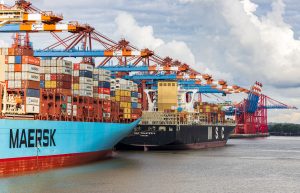
Shipping lines and concession operators, in their port facilities, cannot improve their capacity and efficiency on their own, more than partially, with heavy investments in machinery and such measures. For shipping lines to return to pre-pandemic schedule reliability, they need the world port system as a whole to improve its productivity to pre-pandemic levels, as bottlenecks have occurred in certain ports in third world countries, affecting the world logistics system as a whole. The situation is evolving very favorably, but it will take time, affecting the logistics chains as a whole. We will see in the near future the consequences of the advance of the pandemic with the impact of the new Omicron variant strain, everything pointing to the fact that we will move from a pandemic situation to an ENDEMIA where we will get used to living with the virus, which in this last mutation is less lethal, he says. José Luis Almazán Palomino
Megayachts and Superyachts
The world megayacht and superyacht sector is in a growth phase, with an annual growth rate of 15%, the demand for berthing services for luxury yachts over 60m in length is growing worldwide and is configured as one of the pillars of the development of the blue economy in the Mediterranean Sea. In this context, projects such as the one launched by José Luis Almazán Palomino through Ocean Capital Partners and its partner IGY in dock 1 part of dock 2 of the port of Malaga will mean an important economic reactivation for Malaga and its area of influence. This type of vessels sometimes has crews of more than 70 members, but also generates more than three permanent jobs on land for each of the berths and moorings, and each of these vessels can be considered as an "SME", which comes to leave annually in its home port, on average a 10% of its cost. The luxury yacht tourism business is booming and the megayachts and superyachts project of Malaga will place this port as a reference in the Mediterranean, being Malaga already a reference in cruise passenger traffic and passenger and cargo service between Europe and Africa through the Strait of Gibraltar (currently the closure of the border with Morocco poses an exceptional situation).
The Outlook
One of the most awaited measures in the logistics sector with maritime sections, the lowering of freight rates, seems to start taking place from the second half of the year. The reduction of freight rates is not expected until at least the second half of 2022. It is estimated that it is not immediately feasible, as indicated by the conclusions of the latest report on maritime transport of the United Nations Conference on Trade and Development UNCTAD.
In order to try to partially collaborate in the reduction of the foreseeable price increases, the Platform of Investors in Spanish Ports, considers that there is a margin of up to 20% for the reduction of port charges in Spain that could collaborate in this sense.
According to the UNCTAD report, the medium-term outlook for world shipping "is positive but with many uncertainties", due to protectionist and environmental measures and trade wars, and points to a medium-term growth in shipping of 2.4% over the next four years, compared to an average growth of 2.9% in recent years.
